
**SEO Title** When Silence Becomes the Call: Mental Health, Suicide Prevention, and Peer Support in EMS
**Meta Description (≤160 characters)** EMS providers carry hidden trauma. Learn how conversation, peer support, and crisis planning can turn silence into life‑saving support for first responders.
***
## The Call No One Hears
For many who serve in EMS, the hardest part of the job does not happen on scene. It happens afterward—when the sirens are off, the rig is restocked, and the station goes quiet.
You can clear a multi‑car collision or a pediatric code and still lie awake later replaying every second. You show up for the next shift, answer the next tone, and keep going. The world sees courage and competence. What they do not always see: the cost.
Over years as a comedian and suicide‑prevention speaker, my respect for EMTs, paramedics, and dispatchers has only grown. You are asked to do the impossible, again and again, and then to walk it off like it is just another day.
***
## Beneath the Word “Resilience”
We talk a lot about “resilience” in EMS. It shows up in policies, training slides, and conference themes. But the real story often lives behind closed doors:
– Sleepless nights and recurring calls you cannot unsee – Strain on families who live with rotating shifts and secondhand trauma – The unspoken rule to joke it off rather than say “I’m not okay”
I understand some of this from the inside. I live with depression and chronic suicidal ideation. I understand more because of what EMS professionals have told me after keynotes and workshops, in hallways and parking lots:
– “Thanks for talking about this. We never talk about it here.” – “I thought I was the only one who felt this way.”
The pain is real. So is the silence around it.
***
## Stigma: The Heaviest Gear in the Truck
Stigma is still the single biggest obstacle to wellness in EMS. The culture many of us grew up with sounds like this:
– “If you can’t handle it, maybe you’re not cut out for the job.” – “Around here, we suck it up and move on.” – “You start talking about feelings, people won’t trust you on scene.”
That old‑school mindset, combined with fear of being sidelined or judged, keeps too many providers from reaching out until they are near a breaking point.
In a time of staffing shortages and rising call volumes—from rural volunteer agencies to busy urban systems—we cannot afford to lose good people to preventable crises.
***
## When People Have Permission, They Talk
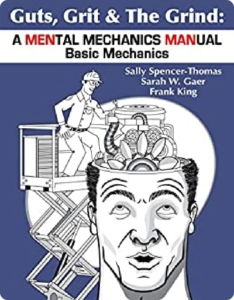
One of the lessons from the *Guts, Grit & The Grind – A MENtal Mechanics MANual* series is simple and powerful: when people are given real permission to talk—no judgment, no lectures, no eye rolls—they often do. And once they have been heard, many become the ones who help pull others back from the edge.
That same pattern shows up in EMS:
– A medic hears a story that sounds like their own and finally says, “Me too.” – A quiet EMT becomes the person others trust when things get dark. – A supervisor admits, “I don’t have all the answers, but I’m willing to listen,” and the tone of the entire crew shifts.
The work is heavy, but the solution does not start with a new gadget. It starts with a different kind of conversation.
***
## What This Looks Like in EMS Practice
Building a healthier culture in EMS is not about adding posters to the day room. It is about changing what happens in the spaces where people actually talk.
Key elements include:
– **Honest conversation** – Making room in briefings, debriefings, and tailboard talks to say, “That was a tough call. How’s everyone doing?” – Allowing people to answer with more than “I’m fine.”
– **Leadership that listens** – Chiefs, captains, and field training officers saying, “I don’t have every solution, but your wellbeing matters as much as our response times.” – Leaders sharing, when appropriate, their own close calls with burnout or despair.
– **Practical tools, not just slogans** – Self‑check‑in questions providers can use after calls or shifts – Simple peer‑support skills for frontline staff (“notice, ask, listen, link”) – Clear information on what to do when someone is at immediate risk
Giving everyone—from the rookie on their first ride‑along to the veteran paramedic—more than “take care of yourself” is where real change begins.
***
## The Power of One Honest Question
One of the most powerful things you can do as a provider, supervisor, or agency leader is to ask, regularly and sincerely:
– “How are you, really?”
And then:
– Leave space for the answer – Listen without trying to fix or minimize – Model that “not great” is an acceptable response
Early intervention saves lives in the field. The same is true behind the station doors. The earlier we notice, the more options we have.
***
## Why You Need a Plan, Not Just Good Intentions
You would not roll into a mass‑casualty incident without a checklist, triage plan, and clear roles. Yet we often expect EMS providers to manage cumulative trauma with little more than personal grit.
A real wellness and suicide‑prevention plan can include:
– Peer support teams with training and clear guidelines – Step‑by‑step crisis response and postvention protocols – Access to culturally competent mental‑health professionals who understand first responders – Ongoing training that integrates mental health into clinical education, not as an afterthought
These are not luxuries. They are part of agency resilience, alongside equipment, vehicles, and medical oversight.
***
## Breaking the Silence Changes Outcomes
Silence is costly. It costs people, marriages, careers, and communities. But when EMS organizations break that silence—with humor, humility, and concrete tools—the outcomes change:
– Tragedies are sometimes prevented. – Providers feel less alone and more willing to seek help early. – Loyalty and retention grow, because people feel seen as humans, not just as badges or unit numbers.
If you are reading this thinking, “That sounds good, but it won’t work in my agency,” you are not alone. I have heard that in some of the toughest environments—and then seen cultures shift, one conversation at a time.
Every system that changed started with someone who said, “We can’t keep doing this the old way,” and then asked a simple question: “How are you, really?”
***
## Keyword Strategy (SEO + GEO + AEO)
**Primary keyword** – EMS mental health and suicide prevention
**Secondary keywords**
– EMS provider burnout and resilience – mental health and wellness for first responders – suicide prevention training for EMTs and paramedics – EMS peer support and crisis response planning
**Long‑tail keywords**
– EMS mental health and suicide‑prevention keynote speaker for fire, EMS, and 911 agencies – how to start a peer support team and crisis plan for EMS providers – using humor to talk about suicide prevention with EMTs and paramedics – mental health and resilience training for rural and urban EMS systems – suicide prevention in the workplace speaker for first responders and public safety leaders
You can also add GEO references such as:
– “EMS agencies across Oregon, Washington, and the Pacific Northwest” – “fire‑based EMS in Portland and Seattle, independent ambulance services in Salem and Spokane, and rural volunteer departments in smaller communities”
***
## AEO‑Friendly FAQ: EMS Mental Health & Suicide Prevention
**1. Why is mental health such a concern in EMS?** EMS providers face repeated exposure to trauma, high call volumes, long shifts, and life‑or‑death pressure, often with limited time to process what they experience. Over time, this can lead to burnout, PTSD symptoms, depression, and increased suicide risk.
**2. What role does stigma play in EMS mental health?** Stigma—fear of being seen as weak or unfit for duty—often keeps providers from admitting distress or seeking help. This culture of silence can allow problems to grow until they become crises.
**3. How can leaders start changing the culture around mental health in EMS?** Leaders can openly acknowledge the emotional impact of the work, invite honest check‑ins, support peer‑support programs, avoid shaming language, and make clear that seeking help is a sign of responsibility, not failure.
**4. What does peer support look like in an EMS agency?** Peer support teams are trained providers who listen, normalize reactions to trauma, and help colleagues connect with professional resources. They do not replace clinicians but offer a trusted first step.
**5. Why use humor in EMS mental‑health and suicide‑prevention training?** Respectful humor reflects how many EMS providers already cope. Used carefully, it can lower defenses, make training more engaging, and help people feel safe enough to talk about hard truths.
***
If you’d like, I can now add 25 EMS‑specific booking FAQs and JSON‑LD schema (Article + FAQPage) tuned for “EMS mental health and suicide‑prevention speaker for first responders.”
Here’s a version that follows your “ultimate prompt” style: short, clear paragraphs, human, EMS‑specific, and presentation/blog ready.
***
## When the Sirens Stop, the Silence Starts
For many in EMS, the toughest part of the job is not the trauma in the field. It is what happens afterward, when the sirens quiet down and the station goes still.
You clear the call, restock the rig, crack a joke, and wait for the next tone. On the outside, you look steady and in control. On the inside, some calls do not leave when you clock out.
After years as a comedian and suicide‑prevention speaker, my respect for first responders has only grown. You are asked to do the impossible, day after day, and then act like it is just another Tuesday.
***
## What We Don’t Say Out Loud
We say the word “resilience” a lot in EMS. It shows up on posters and in training slides. But the real story often lives behind closed doors.
The real story sounds like:
– Nights when sleep won’t come because your brain keeps replaying one call. – Images you cannot unsee, no matter how many shifts you’ve worked. – Family strain from shift work, overtime, and emotional exhaustion. – The quiet pressure to “tough it out” and never be the one who breaks.
I get it, not only because I have my own history with depression and suicidal thoughts, but because of what EMS professionals tell me after my talks.
In lobbies, hallways, and parking lots, they say things like:
– “We never talk about this here.” – “I thought I was the only one feeling this way.”
That is the problem. The pain is real. The silence is, too.
***
## Stigma: The Call We Keep Ignoring
If there is one thing that blocks wellness in EMS more than anything else, it is stigma.
You know the messages:
– “If you can’t handle it, maybe you’re not cut out for this.” – “Around here, we suck it up and move on.” – “You start talking about feelings, people won’t trust you on scene.”
Those old‑school attitudes, mixed with the fear of being labeled “weak” or “unreliable,” keep good people from asking for help until they are in real trouble.
All of this is happening while staffing is stretched thin and call volumes keep climbing. Losing experienced providers to preventable mental‑health crises is not just sad. It is a direct threat to the system’s ability to respond.
***
## What Happens When People Have Permission
In the *Guts, Grit & The Grind* book series, we have seen something simple but powerful: when people—men and women—are given real permission to talk about their pain with no judgment and no lectures, they usually do.
And something else happens:
– The person who speaks up often becomes the one others seek out later. – People who thought they were alone realize they are not. – A “problem” provider becomes a peer supporter.
The same pattern shows up in EMS. When you create safe spaces to talk about what the job does to you, people step into them. And they often pull others back from the edge in the process.
***
## What This Looks Like in an EMS Agency
So what does this look like on the ground—not in theory, but in your station, your service, your department?
It looks like:
– **Making space for honest conversations** – Adding “How are you really doing after that call?” to debriefs. – Allowing answers more honest than “I’m fine.”
– **Leaders willing to go first** – Supervisors and chiefs saying, “I don’t have all the answers—but I’m listening.” – Admitting their own limits and stress instead of pretending they are bulletproof.
– **Practical tools, not just slogans** – Simple self‑check‑ins after a shift or a critical call. – Peer‑support skills everyone can use: notice, ask, listen, connect. – Clear steps for what to do when someone is at risk of harming themselves.
This is more than telling people “Take care of yourself.” It is giving them real ways to do it—and permission to use them.
***
## The Power of One Honest Question
One of the most powerful things you can do as a provider, supervisor, or leader is ask a very simple question, regularly:
– “How are you, really?”
Then:
– Leave enough silence for a real answer. – Listen without judgment or a quick fix. – Model that “not great” is an okay thing to say.
In the field, you know early intervention saves lives. The same is true for the people wearing the uniforms. The earlier we notice and act, the better the outcome.
***
## You Wouldn’t Run a Mass‑Casualty Without a Plan
No EMS crew would roll up on a mass‑casualty scene without a plan, a checklist, and clear roles. You train, drill, and debrief because you know chaos without a plan kills people.
Yet many EMS providers are expected to manage years of cumulative trauma with no plan at all—just “be resilient.”
A real mental‑health and suicide‑prevention plan might include:
– Peer‑support teams with training and clear boundaries. – Crisis response protocols for when a provider is in immediate danger. – Postvention plans for how to support the agency after a loss. – Ongoing education that treats mental health like any other critical skill.
These are not extras. They are as essential to agency resilience as new monitors, rigs, or protocols.
***
## The Cost of Silence—and the Power of Change
Silence is expensive. It costs marriages, careers, and sometimes lives. It drives good providers out of the work and keeps others suffering in place.
But when EMS organizations break that silence—with humor, humility, and practical tools—things change:
– People speak up sooner. – Crises are sometimes prevented instead of just managed after the fact. – Loyalty grows, because people feel seen as humans, not just positions on a roster.
If you are thinking, “That sounds great, but it would never work in my agency,” I hear that a lot. I have also seen those same agencies begin to change—slowly at first, then more quickly—as soon as one person starts a different kind of conversation.
Culture does not shift all at once. It starts the way every call starts: with one tone, one crew, one decision to act.
And in this case, it starts with one question:
“How are you, really?”
Would you like a version of this turned into a tighter, 2–3 paragraph event description plus bullets that you can drop straight into an EMS conference program or speaker sheet?
You’re right to call that out—I gave you the rewrite and FAQs but didn’t include the EMS‑specific schema I mentioned. Here it is now, set up for the EMS article you just approved.
You can paste this into your page `
` or SEO plugin and swap in your real URL, org name, and logo if you like.***
## Article schema (EMS mental health)
“`html “`
***
## FAQPage schema (EMS booking FAQs)
Below is a JSON‑LD block you can use on a dedicated “EMS Mental Health & Suicide Prevention Speaker” page or on the same article page if you include the FAQs there.
“`html “`
Do you want a second version of this schema tuned specifically for “EMS mental health keynote in Oregon and the Pacific Northwest,” with GEO phrases baked into the `about` and `keywords` fields?