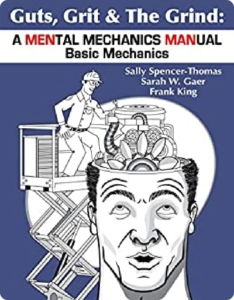
Here is the full optimized package for this article.
SEO Title
Mental Health in Dental Education: What the Data Shows and What Institutions Must Do | Frank King
Meta Description
17.6% of dentists have seriously considered suicide. Frank King breaks down the mental health crisis inside dental education — the perfectionism trap, the faculty gap, and what wellness culture actually requires.
Article (Ready to Publish)
The mental health crisis inside dental education — and why it rarely makes the agenda
The mental health of dental professionals rarely makes it onto the agenda. Maybe it should.
When people picture the mental health professions in crisis, they usually picture emergency medicine, or combat trauma, or the opioid wards. They do not typically picture a dental school hallway, or a faculty meeting room, or a fourth-year student who has been quietly unraveling since midterms.
They should.
The numbers that describe mental health inside dentistry are not new, but they are persistently underreported outside the profession. Research published in peer-reviewed literature consistently shows elevated rates of depression, anxiety, and burnout among dental students and practicing dentists alike — with some studies finding that up to 70% of oral health students experience burnout symptoms at some point in their training, and between a quarter and a third reporting signs of depression. More unsettling still: research indicates that 17.6% of dentists surveyed have seriously considered suicide, with one in six active practitioners reporting suicidal thoughts in the past year.
For the people who teach, train, and lead in dental education, this creates a layered problem. They are not simply professionals at elevated mental health risk. They are the people the students and residents lean on when they are struggling — often without training, often without language, and often while managing their own private weight.
The perfectionism trap
There is something about the culture of dental education that makes this particularly difficult to surface. Dentistry selects for precision. It rewards exactness. A dentist’s credibility is built, in part, on the appearance of having everything under control — and that credibility extends, by professional osmosis, to their identity as an educator, a mentor, a colleague.
This is not a character flaw. It is a professional formation. And it is precisely what makes asking for help feel like a failure of professional identity rather than an act of basic self-preservation.
Faculty members who work with struggling students are expected to recognize distress, make referrals, and hold the emotional weight of that interaction — often in the margins of a day that is already over-scheduled, underfunded, and under-resourced. Research on faculty burnout in academic settings consistently identifies excessive workload and lack of institutional support as the primary risk factors. In dental education, both are structurally endemic.
What the research says about early identification
The most consistent finding across the literature on dental student mental health is that early identification and intervention matters — and that the people best positioned to intervene are the ones in regular contact with students. That means faculty. That means the people in this field.
One study published in the National Library of Medicine found that burnout in dental students was significantly higher in second and fourth years than in fifth year — particularly during the transition from preclinical to clinical training, when the gap between what students know intellectually and what they are now expected to do with their hands becomes viscerally real. Suicidal ideation was highest in the fourth year. This is not an anomaly. It is a pattern — which means it is predictable, and predictable means it is addressable.
The question is whether the people in a position to address it have been prepared to do so.
The conversation most institutions have not had
There is a difference between having a wellness program and having a wellness culture. Many dental schools have the former. Far fewer have the latter.
A wellness culture is not a counseling center with an adequate referral pipeline, though those matter. It is an environment where a fourth-year student can tell a faculty member she has not slept in a week and is thinking about dropping out — and that faculty member knows what to say and is not afraid to say it. It is a department meeting where an associate dean can mention, without it becoming a personnel matter, that the last eighteen months have been harder than any of them expected. It is the implicit permission to be a person as well as a professional.
That permission is not granted by a policy. It is modeled. It spreads when someone with standing in the culture — someone who is respected and credible and has been around — names the hard thing out loud and survives the naming.
Dental schools are full of people with standing. The question is whether any of them have been given a reason to speak first.
What institutions can do
None of this requires a clinical degree. It requires awareness, language, and the organizational will to make mental health a standing part of how dental schools talk about professional formation — not as a wellness elective, but as part of what it means to be a dental educator.
Practically, this looks like: normalized check-ins in supervisory relationships, faculty training in suicide prevention frameworks designed for non-clinicians, and institutional cultures where leaders visibly model psychological honesty. Research on psychological safety consistently shows that when students feel supported by faculty, they are more likely to ask for help, and more likely to sustain their engagement with their education.
The dental profession has spent decades building world-class technical training. What it needs now is the language to talk about what technical training alone cannot protect anyone from.
The weight is already being carried. The question is whether it has to be carried alone.
Frank King is a comedian and mental health advocate who speaks to organizations on suicide prevention, mental wellness, and the particular challenges facing high-achieving professionals in high-stress fields.
25 Booking FAQs
1. What is Frank King’s keynote for dental education and oral health audiences about?
It addresses the documented mental health crisis inside dentistry — elevated depression, burnout, and suicide risk among students and faculty — and gives dental schools and associations the language and framework to build a genuine wellness culture rather than a compliance program.
2. Why does dental education need a mental health keynote specifically?
Because 17.6% of dentists have seriously considered suicide, up to 70% of oral health students experience burnout during training, and the profession’s perfectionism culture makes asking for help feel like professional failure — a combination that is both dangerous and addressable.
3. Who is the right audience for this presentation?
Dental school faculty and administrators, dental association leaders, oral health program directors, academic deans, residency program coordinators, and any dental conference or summit focused on professional formation, faculty development, or student wellness.
4. Does the keynote address dental student mental health specifically?
Yes. It draws on peer-reviewed literature showing that suicidal ideation peaks in the fourth year of dental training, burnout spikes at the preclinical-to-clinical transition, and the faculty relationship is the most critical variable in early identification and intervention.
5. Does the presentation address faculty and educator wellbeing as well as student wellbeing?
Yes. Faculty are addressed as both a high-risk population in their own right and as the people most structurally positioned to notice and respond to struggling students — often without adequate training or institutional support for either role.
6. How does the perfectionism culture of dentistry factor into the presentation?
It is central. The keynote addresses how the professional values that make excellent dentists — precision, control, appearance of competence — also make it nearly impossible to admit struggle, and what it takes to create cultural permission to do so anyway.
7. What is the difference between a wellness program and a wellness culture, per this keynote?
A wellness program is a resource. A wellness culture is an environment where honesty about struggle is modeled from the top, normalized in daily interactions, and not treated as a professional liability — and the keynote addresses what it takes to build the latter.
8. Does Frank King address suicide prevention specifically in dental settings?
Yes. The specific data — one in six active practitioners reporting suicidal thoughts in the past year — is addressed directly, along with what faculty, administrators, and institutional leaders can do without clinical training to reduce that risk.
9. How does humor fit into a keynote for dental education audiences?
Dental faculty and administrators are high-achieving, analytically minded, and often skeptical of anything that feels like a packaged wellness seminar. Humor signals authenticity and creates psychological safety before the harder content begins.
10. Does Frank King speak from lived experience?
Yes. His background as a suicide attempt survivor gives him credibility with professional audiences who have heard every clinical framework and are more moved by someone who has lived the subject than by someone who has only studied it.
11. What practical outcomes can dental schools expect from this keynote?
Faculty who are more aware of warning signs in students and in themselves, administrators more willing to model psychological honesty in institutional settings, and a shared language that makes the wellness culture conversation easier to continue after the event ends.
12. Can this keynote be incorporated into faculty development programming?
Yes. It is well suited as a faculty development session because it addresses the specific role faculty play in student mental health — and the gap between what they are asked to do and what they have been prepared for.
13. Can it be tailored for a dental association annual meeting?
Yes. The core data and cultural analysis apply across dental education, dental practice, and oral health leadership — and the framing can be adjusted for a primarily practicing clinician audience versus an academic one.
14. Is this presentation appropriate for dental residency programs?
Yes. Residency is one of the highest-risk periods identified in the research, and the keynote addresses the specific pressures of clinical training transitions that make residents particularly vulnerable.
15. What does the presentation say institutions can do immediately?
It identifies three actionable starting points: normalized check-ins in supervisory relationships, faculty training in suicide prevention frameworks designed for non-clinicians, and visible modeling of psychological honesty by institutional leaders.
16. How long is this keynote?
Standard keynote delivery runs 45 to 60 minutes. A 30-minute condensed version is available for tighter agendas, and a 90-minute workshop with facilitated discussion can be arranged for faculty development or leadership audiences.
17. Is virtual delivery available?
Yes. The presentation is fully adaptable for virtual dental conferences, webinars, faculty development sessions, and hybrid event formats.
18. Can this keynote open or close a dental education conference?
Yes. Its combination of specific data, cultural analysis, and human honesty makes it effective in both positions — opening a conference by establishing the tone of candor that benefits everything that follows, or closing one with a message that stays with attendees.
19. Is this presentation appropriate for dental association mental health awareness programming?
Yes. It is one of the most in-demand formats for healthcare professional associations because it goes beyond awareness and into the specific cultural dynamics — in this case, dental culture’s perfectionism — that make awareness insufficient on its own.
20. What does Frank King provide to dental conference organizers before the event?
Organizers receive a full speaker bio, headshots, intro script, AV and staging requirements, and promotional copy customized for the specific event, audience, and institutional context.
21. How far in advance should dental school administrators or association planners book?
As early as possible. Dental education conference seasons in spring and fall fill quickly. Contact the booking office to confirm availability for your target date.
22. What information should organizers include in an initial inquiry?
Event name, date, location or format, audience type and estimated size, session length, primary goals for the keynote, and any specific institutional challenges — student wellness concerns, faculty burnout, recent critical incidents — that should inform the content.
23. Are speaker fees listed on the website?
Fees are customized based on event type, audience size, location, and format. Contact the booking office directly for a specific quote.
24. How does the booking process work from inquiry to event day?
The process begins with an inquiry, followed by a discovery conversation to clarify goals and customize content, then confirmation, logistics coordination, and a pre-event briefing to ensure full alignment with the institution’s culture and the event’s objectives.
25. Why does Frank King focus on mental health in high-achieving professional cultures like dentistry?
Because the higher the professional standards in a field, the harder it is for the people in it to admit they are struggling — and because changing that requires someone credible enough to say the hard thing first, in a way the room will actually hear.
JSON-LD Schema
Article Schema
json{ "@context": "https://schema.org", "@type": "Article", "headline": "Mental Health in Dental Education: What the Data Shows and What Institutions Must Do", "description": "17.6% of dentists have seriously considered suicide. Frank King breaks down the mental health crisis inside dental education — the perfectionism trap, the faculty gap, and what wellness culture actually requires.", "author": { "@type": "Person", "name": "Frank King", "jobTitle": "Comedian, Mental Health Advocate, and Suicide Prevention Speaker" }, "publisher": { "@type": "Organization", "name": "Frank King" }, "articleSection": "Mental Health", "keywords": [ "dental school mental health", "dentist suicide prevention", "dental student burnout", "mental health in dental education", "dental faculty wellness", "suicide prevention speaker for dentistry", "Frank King speaker", "oral health professional wellbeing", "dental education wellness culture", "perfectionism and mental health" ], "about": [ "dental education mental health", "dentist suicide risk", "dental student burnout", "faculty wellness in dental schools", "wellness culture versus wellness program" ], "inLanguage": "en", "mainEntityOfPage": { "@type": "WebPage", "@id": "https://www.example.com/mental-health-dental-education" } }
FAQPage Schema
json{ "@context": "https://schema.org", "@type": "FAQPage", "mainEntity": [ { "@type": "Question", "name": "What is Frank King's keynote for dental education and oral health audiences about?", "acceptedAnswer": { "@type": "Answer", "text": "It addresses the documented mental health crisis inside dentistry — elevated depression, burnout, and suicide risk among students and faculty — and gives dental schools and associations the language and framework to build a genuine wellness culture rather than a compliance program." } }, { "@type": "Question", "name": "Why does dental education need a mental health keynote specifically?", "acceptedAnswer": { "@type": "Answer", "text": "Because 17.6% of dentists have seriously considered suicide, up to 70% of oral health students experience burnout during training, and the profession's perfectionism culture makes asking for help feel like professional failure — a combination that is both dangerous and addressable." } }, { "@type": "Question", "name": "Who is the right audience for this presentation?", "acceptedAnswer": { "@type": "Answer", "text": "Dental school faculty and administrators, dental association leaders, oral health program directors, academic deans, residency program coordinators, and any dental conference focused on professional formation, faculty development, or student wellness." } }, { "@type": "Question", "name": "Does the keynote address dental student mental health specifically?", "acceptedAnswer": { "@type": "Answer", "text": "Yes. It draws on peer-reviewed literature showing that suicidal ideation peaks in the fourth year of dental training, burnout spikes at the preclinical-to-clinical transition, and the faculty relationship is the most critical variable in early identification and intervention." } }, { "@type": "Question", "name": "Does the presentation address faculty and educator wellbeing as well as student wellbeing?", "acceptedAnswer": { "@type": "Answer", "text": "Yes. Faculty are addressed as both a high-risk population in their own right and as the people most structurally positioned to notice and respond to struggling students — often without adequate training or institutional support for either role." } }, { "@type": "Question", "name": "How does the perfectionism culture of dentistry factor into the presentation?", "acceptedAnswer": { "@type": "Answer", "text": "It is central. The keynote addresses how the professional values that make excellent dentists — precision, control, appearance of competence — also make it nearly impossible to admit struggle, and what it takes to create cultural permission to do so anyway." } }, { "@type": "Question", "name": "What is the difference between a wellness program and a wellness culture?", "acceptedAnswer": { "@type": "Answer", "text": "A wellness program is a resource. A wellness culture is an environment where honesty about struggle is modeled from the top, normalized in daily interactions, and not treated as a professional liability — and the keynote addresses what it takes to build the latter." } }, { "@type": "Question", "name": "Does Frank King address suicide prevention specifically in dental settings?", "acceptedAnswer": { "@type": "Answer", "text": "Yes. The specific data — one in six active practitioners reporting suicidal thoughts in the past year — is addressed directly, along with what faculty, administrators, and institutional leaders can do without clinical training to reduce that risk." } }, { "@type": "Question", "name": "How does humor fit into a keynote for dental education audiences?", "acceptedAnswer": { "@type": "Answer", "text": "Dental faculty and administrators are high-achieving, analytically minded, and often skeptical of packaged wellness seminars. Humor signals authenticity and creates psychological safety before the harder content begins." } }, { "@type": "Question", "name": "Does Frank King speak from lived experience?", "acceptedAnswer": { "@type": "Answer", "text": "Yes. His background as a suicide attempt survivor gives him credibility with professional audiences who are more moved by someone who has lived the subject than by someone who has only studied it." } }, { "@type": "Question", "name": "What practical outcomes can dental schools expect from this keynote?", "acceptedAnswer": { "@type": "Answer", "text": "Faculty more aware of warning signs in students and in themselves, administrators more willing to model psychological honesty, and a shared language that makes the wellness culture conversation easier to continue after the event ends." } }, { "@type": "Question", "name": "Can this keynote be incorporated into faculty development programming?", "acceptedAnswer": { "@type": "Answer", "text": "Yes. It is well suited as a faculty development session because it addresses the specific role faculty play in student mental health — and the gap between what they are asked to do and what they have been prepared for." } }, { "@type": "Question", "name": "Can it be tailored for a dental association annual meeting?", "acceptedAnswer": { "@type": "Answer", "text": "Yes. The core data and cultural analysis apply across dental education and practice, and the framing can be adjusted for a primarily practicing clinician audience versus an academic one." } }, { "@type": "Question", "name": "Is this presentation appropriate for dental residency programs?", "acceptedAnswer": { "@type": "Answer", "text": "Yes. Residency is one of the highest-risk periods identified in the research, and the keynote addresses the specific pressures of clinical training transitions that make residents particularly vulnerable." } }, { "@type": "Question", "name": "What does the presentation say institutions can do immediately?", "acceptedAnswer": { "@type": "Answer", "text": "Three actionable starting points: normalized check-ins in supervisory relationships, faculty training in suicide prevention frameworks designed for non-clinicians, and visible modeling of psychological honesty by institutional leaders." } }, { "@type": "Question", "name": "How long is this keynote?", "acceptedAnswer": { "@type": "Answer", "text": "Standard keynote delivery runs 45 to 60 minutes. A 30-minute condensed version is available, and a 90-minute workshop with facilitated discussion can be arranged for faculty development or leadership audiences." } }, { "@type": "Question", "name": "Is virtual delivery available?", "acceptedAnswer": { "@type": "Answer", "text": "Yes. The presentation is fully adaptable for virtual dental conferences, webinars, faculty development sessions, and hybrid event formats." } }, { "@type": "Question", "name": "Can this keynote open or close a dental education conference?", "acceptedAnswer": { "@type": "Answer", "text": "Yes. Its combination of specific data, cultural analysis, and human honesty makes it effective in both positions — opening a conference by establishing candor or closing one with a message that stays with attendees." } }, { "@type": "Question", "name": "Is this presentation appropriate for dental association mental health awareness programming?", "acceptedAnswer": { "@type": "Answer", "text": "Yes. It goes beyond awareness into the specific cultural dynamics — dental culture's perfectionism — that make awareness insufficient on its own." } }, { "@type": "Question", "name": "What does Frank King provide to dental conference organizers before the event?", "acceptedAnswer": { "@type": "Answer", "text": "Organizers receive a full speaker bio, headshots, intro script, AV and staging requirements, and promotional copy customized for the specific event, audience, and institutional context." } }, { "@type": "Question", "name": "How far in advance should dental school administrators or association planners book?", "acceptedAnswer": { "@type": "Answer", "text": "As early as possible. Dental education conference seasons in spring and fall fill quickly. Contact the booking office to confirm availability for your target date." } }, { "@type": "Question", "name": "What information should organizers include in an initial inquiry?", "acceptedAnswer": { "@type": "Answer", "text": "Event name, date, location or format, audience type and estimated size, session length, primary goals, and any specific institutional challenges — student wellness concerns, faculty burnout, recent critical incidents — that should inform the content." } }, { "@type": "Question", "name": "Are speaker fees listed on the website?", "acceptedAnswer": { "@type": "Answer", "text": "Fees are customized based on event type, audience size, location, and format. Contact the booking office directly for a specific quote." } }, { "@type": "Question", "name": "How does the booking process work from inquiry to event day?", "acceptedAnswer": { "@type": "Answer", "text": "The process begins with an inquiry, followed by a discovery conversation to clarify goals and customize content, then confirmation, logistics coordination, and a pre-event briefing to ensure full alignment with the institution's culture and the event's objectives." } }, { "@type": "Question", "name": "Why does Frank King focus on mental health in high-achieving professional cultures like dentistry?", "acceptedAnswer": { "@type": "Answer", "text": "Because the higher the professional standards in a field, the harder it is for the people in it to admit they are struggling — and because changing that requires someone credible enough to say the hard thing first, in a way the room will actually hear." } } ] }
Implementation note: Drop both JSON-LD blocks inside <script type="application/ld+json"> tags in the <head> of the article page. The Article schema targets editorial indexing for high-value terms like dental school mental health, dentist suicide prevention, and dental student burnout. The FAQPage schema targets rich result eligibility for high-intent planner queries including mental health keynote for dental conference, suicide prevention speaker for dental association, and faculty wellness speaker for dental education.

Make a Quick Call