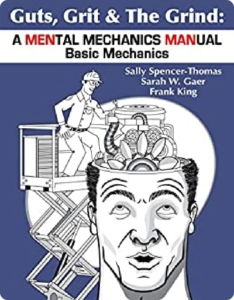
The Parable: What the Foreman Didn’t See
Every morning at 6:15, Dale walked the site before anyone else arrived.
He checked the scaffolding. He checked the trench shoring. He checked the crane’s outriggers, because a crane that isn’t level is a crane that kills someone.
Dale had run crews for eighteen years. He could look at a foundation pour and tell you, before it cured, whether it would hold. He could hear a generator idle wrong from forty yards away. He noticed everything that could hurt his people.
Everything except Mike.
Mike had been on the crew for eleven years. He was the guy who trained the apprentices. He knew which studs were true and which ones lied to your level. He was, in every sense that mattered on a job site, load-bearing.
Nobody on that crew would have called Mike “struggling.” He showed up early. He laughed at the right jokes. He carried more weight — literally and otherwise — than anyone else on site.
That was the problem. Nobody was checking on the guy holding everything up.
The Turning Point
Mike’s wife had left in March. He hadn’t mentioned it.
His overtime had quietly become his only reason to leave the house.
He’d started making comments — small ones, the kind that sound like jokes — about not being around much longer.
Nobody flagged it, because on a construction site, toughness is the uniform. Nobody wants to be the guy who asks the wrong question and makes it weird.
Dale found out two weeks later, standing in a hospital hallway, that Mike had tried to take his own life the night before.
He survived. Barely.
What Dale Learned
Dale had spent two decades inspecting scaffolding, shoring, and steel. He had never once inspected the man swinging the hammer.
He realized something that changed how he ran every crew after that:
A foundation isn’t just concrete. It’s also the people standing on it, and nobody checks those cracks with a level.
The strongest guy on the crew is often the one nobody checks on — because strength looks like the absence of a problem, not the presence of one.
Silence isn’t the same as “fine.” On a job site, silence is often just noise nobody’s trained to hear.
A five-second question can be structural. “Hey, you good?” — asked and meant — can be the load-bearing beam in someone’s worst week.
Dale started doing something different. Every morning, before he walked the scaffolding, he walked his crew. Not with a clipboard. Just eyes and a question.
It didn’t fix everything. But it meant nobody on his site would ever again be the guy nobody saw coming.
Building From the Ground Up: Why Construction’s Next Safety Priority Is Mental Health
There’s a conversation happening on job sites across the country that never makes it into the morning toolbox talk. It’s not about fall protection or trench safety. It’s quieter than that — and far more urgent.
It’s the conversation that happens after a crew member who seemed fine doesn’t show up Monday. Or worse, doesn’t come home.
The Numbers Behind the Silence
Construction has one of the highest suicide rates of any major U.S. industry — consistently ranked among the top occupations for suicide risk, alongside mining and agriculture. Male construction workers die by suicide at a rate roughly four times higher than the general working population.
These aren’t statistics from a distant industry. These are the framers, electricians, laborers, and foremen whose names are on tomorrow’s crew list.
The drivers are not mysterious once you look at them honestly:
Physical pain and injury that often leads to opioid dependency
Seasonal, unpredictable work that creates chronic financial stress
A culture of toughness that treats asking for help as a liability, not a strength
Long stretches away from family, especially on traveling crews
Isolation on site — surrounded by people, but rarely truly known by them
Why Awareness Isn’t the Problem — Culture Is
Most site supervisors and safety directors already sense their crews are carrying more than hard hats and tool belts. The challenge isn’t knowing something is wrong. It’s knowing what to do about it — especially in an industry where vulnerability has historically been treated as incompatible with getting the job done.
The research on effective intervention is not complicated, but it is counterintuitive. The single most effective thing a supervisor or coworker can do is not a poster in the break trailer. It’s a direct, human conversation:
“Hey, you’ve seemed different lately. You doing okay? Are you having thoughts of hurting yourself?”
Studies consistently show that asking this question does not plant the idea — it does the opposite. It signals that someone sees you. On a job site where the hardest-working guy is often the most invisible one, being seen is not a small thing.
What Building a Safer Culture Actually Looks Like
Building this kind of safety culture doesn’t require a new HR policy. It requires leadership that models it in small, daily ways:
How a foreman opens a morning huddle
How a supervisor responds when someone says “I’m not doing great”
Whether the break trailer is actually a place where people get to be people for fifteen minutes
Whether toughness is redefined to include the courage to ask for help
None of this replaces EAPs, peer-support programs, or clinical mental health resources. But every one of those programs underperforms in a culture where using them feels like a career risk. The upstream work — reducing stigma, normalizing the conversation, building relational safety on the crew — is what makes the downstream resources usable at all.
The Load-Bearing Employee
The workers most at risk are often the ones you’d least expect. They’ve been on the crew for a decade. They know every stud, every load path, every shortcut that isn’t actually a shortcut. They are, in every measurable sense, indispensable.
They’re also the ones most likely to believe the job can’t function without them — and to conclude, quietly, that this means they can’t afford to ask for help.
The conversation is never comfortable. It never starts naturally on a job site built on toughness. But in an industry that has spent decades perfecting safety around falls, trenches, and machinery while quietly neglecting the safety of the people themselves, it’s overdue.
The only thing harder than having that conversation is not having it until it’s too late.
SEO Metadata
SEO Title: Mental Health in Construction: A Suicide Prevention Speaker’s Guide for Crews & Leaders
Meta Description (156 characters): Construction has one of the highest suicide rates in America. Learn why the toughest crew member is often the one no one checks on — and what to do.
Keyword Strategy
Primary keywords:
Mental health in construction
Suicide prevention speaker for construction
Construction industry suicide prevention
Secondary keywords:
Construction worker mental health
Job site mental health culture
Suicide prevention in construction workplaces
Construction safety mental health training
Long-tail keywords:
Suicide prevention in construction workplaces
Why construction workers have high suicide rates
How to talk to a coworker about suicide on a job site
Mental health keynote speaker for construction associations
Building a suicide-safe culture on construction sites
Geo-targeted keyword variations (adapt per market):
Construction industry mental health speaker [City/State]
Suicide prevention training for [State] construction associations
Workplace mental health keynote for [Region] contractors
[City] construction safety conference mental health speaker
GEO Optimization Notes
Reference regional construction associations (e.g., state AGC chapters, regional home builders associations) when localizing this post for a specific market
Cite region-specific workforce data where available (many states now track construction-sector suicide and overdose rates separately in workforce safety reports)
Reference climate- and season-specific stressors relevant to the region (e.g., seasonal layoffs in colder climates, extreme heat exposure in southern markets) as culturally relevant touchpoints
Mention regional trade culture markers (union hall culture, right-to-work state dynamics, apprenticeship program norms) to increase local relevance and dwell time
AEO (Answer Engine Optimization) — Voice & AI Summary Ready Answers
Q: Why do construction workers have a high suicide rate?
A: Construction workers face physical pain, injury-related opioid risk, unpredictable seasonal income, long stretches away from family, and a workplace culture that discourages asking for help — all of which combine to create elevated suicide risk compared to other industries.
Q: What should you say to a coworker you’re worried about?
A: Ask directly and calmly: “You’ve seemed different lately — are you okay? Are you having thoughts of hurting yourself?” Research shows this question does not increase risk; it signals to the person that they are seen and supported.
Q: Does talking about suicide make it more likely to happen?
A: No. Multiple studies confirm that directly asking someone about suicidal thoughts does not increase risk and often reduces it by opening the door to support.
Q: What can a construction company do to reduce suicide risk on site?
A: Build a culture where checking in is normal, train supervisors to recognize warning signs, connect workers to EAP and peer-support resources, and model vulnerability from leadership down.
50 Booking FAQs for Meeting Planners, Event Organizers & Speakers Bureaus
Speaking Topics
What is Frank King’s core speaking topic?
Frank speaks on workplace suicide prevention and mental health, using humor and personal story to make a hard topic approachable for any audience.
Does Frank customize his talk for the construction industry specifically?
Yes. Frank tailors statistics, language, and stories to reflect the realities of construction crews, job sites, and trade culture.
Is this a motivational talk, a training, or both?
It’s both — a keynote-style presentation that entertains while delivering practical, evidence-based prevention tools.
Can Frank speak on general mental health without focusing specifically on suicide?
Yes, the presentation can be adjusted to emphasize stress, burnout, and mental wellness if suicide-specific content isn’t the primary focus needed.
Does Frank cover postvention (what to do after a loss) as well as prevention?
Yes, postvention guidance for teams and leadership is included in the full presentation.
Can the talk be adapted for a leadership/supervisor audience versus a general crew audience?
Yes, Frank can shift emphasis toward leadership responsibilities and culture-building for supervisor-level audiences.
Does Frank address substance use and opioid risk, which is common in construction?
Yes, this connection is part of the broader risk-factor conversation Frank includes for industry-specific audiences.
Is the content clinical, or is it accessible to a general workforce audience?
It’s designed to be fully accessible — no clinical background needed to understand or apply the content.
How does Frank make such a heavy topic engaging?
Through clean, clever stand-up comedy and personal storytelling drawn from his own lived experience with depression and suicidal ideation.
Can the talk include a Q&A session afterward?
Yes, Q&A can be built into the program length upon request.
Audience Impact
What outcome can we expect for our attendees after this presentation?
Attendees leave with practical language to check in on a struggling coworker, reduced stigma around asking for help, and a memorable framework for recognizing warning signs.
Will this presentation actually reduce workplace incidents?
While no single presentation eliminates risk, Frank’s talk is designed to shift culture — the upstream work that makes EAP and clinical resources more likely to be used.
Is this appropriate for a mixed audience of executives and field crew?
Yes, the material works for mixed audiences and is adjusted in tone and framing depending on the room.
Will attendees feel like they’re being lectured?
No — audience feedback consistently notes the talk feels like a conversation, not a lecture, due to Frank’s comedic delivery.
Is this suitable for a safety-focused audience used to OSHA-style trainings?
Yes, and Frank often frames mental health as a natural extension of existing safety-first culture already familiar to this audience.
Can this be paired with other safety or wellness programming at our event?
Yes, Frank frequently anchors a broader wellness or safety day agenda.
Will this resonate with younger apprentices as well as veteran tradespeople?
Yes, the material is designed to cross generational lines within a crew or company.
How memorable is this presentation compared to a standard training?
Very — the parable and storytelling format is specifically designed to be retained and repeated long after the event.
Can attendees request materials to bring back to their own crews?
Yes, take-home resources can be arranged as part of the booking.
Does Frank address family impact, not just workplace impact?
Yes, family and personal-life stressors are woven into the broader conversation about risk factors.
Customization
Can Frank tailor the talk to our specific trade association or company culture?
Yes, a pre-event call is standard practice to align language, tone, and examples to your audience.
Can regional statistics or examples be included?
Yes, region-specific data can be incorporated when available and provided in advance.
Can the talk be shortened for a lunch keynote slot?
Yes, Frank adjusts length to fit anywhere from a 20-minute segment to a full breakout session.
Can Frank extend this into a half-day or full-day training?
Yes, extended formats with deeper skills-training components are available.
Does Frank incorporate our company’s specific safety culture or branding?
Yes, when details are shared in advance, Frank references your specific culture and safety priorities.
Can this be delivered as a general session or breakout, not just a keynote?
Both formats are available depending on your event structure.
Is there a version specifically for HR and leadership teams?
Yes, a leadership-focused version emphasizing policy, culture-building, and manager responsibility is available.
Can Frank incorporate our association’s existing safety campaign messaging?
Yes, this can be coordinated in the pre-event planning call.
Is the content adjustable for a unionized workforce versus non-union contractors?
Yes, Frank adjusts language and framing based on audience composition.
Can we request specific emphasis on suicide prevention versus general stress management?
Yes, emphasis can be shifted based on your event’s specific goals.
Logistics
What AV equipment does Frank require?
A wireless handheld or lavalier microphone, a projector/screen for slides, and standard stage lighting.
Does Frank travel to our location?
Yes, Frank travels nationally for in-person events.
Is virtual delivery available?
Yes, Frank delivers this presentation virtually via Zoom or other platforms when needed.
How far in advance should we book?
Ideally 3–6 months ahead for major conferences, though shorter timelines can often be accommodated.
What is the typical program length?
Most programs run 30–60 minutes, with flexible extended formats available.
Does Frank require a green room or prep time before speaking?
A brief prep window backstage is appreciated but not required.
Can Frank arrive the day before for a multi-day conference?
Yes, and this is often recommended for larger events with early morning speaking slots.
Does Frank provide his own presentation slides?
Yes, Frank brings a complete, tested slide deck.
What happens if our schedule shifts on the day of the event?
Frank is experienced working with live event schedule changes and can adjust timing as needed.
Can Frank also emcee portions of our event in addition to speaking?
Yes, Frank frequently serves as an emcee in addition to delivering his keynote.
Fees & Booking Process
How do we get a fee quote?
Schedule a free 30-minute discovery call through the website or call directly to receive a proposal tailored to your event.
Does the fee change based on travel distance?
Travel and lodging are typically itemized separately from the speaking fee and discussed transparently during the proposal process.
Is a deposit required to secure the date?
Standard speaker booking practice involves a deposit to hold the date; specifics are outlined in the proposal.
Can we negotiate fees for nonprofit or association budgets?
Reach out directly to discuss your budget — flexibility is often possible depending on event type and format.
What is included in the standard speaking fee?
The keynote presentation, pre-event planning call, and standard travel coordination are typically included; specifics are confirmed in your proposal.
Do you offer package pricing for multi-day events or multiple sessions?
Yes, multi-session and multi-day packages can be quoted upon request.
What is the cancellation or rescheduling policy?
Details are outlined in the standard speaking agreement provided during booking.
Can our speakers bureau book Frank directly?
Yes, Frank works directly with speakers bureaus and can coordinate through your standard bureau process.
Is there a W-9 or standard vendor paperwork available for our procurement process?
Yes, standard vendor documentation is available upon request during booking.
What is the very first step to start the booking process?
Schedule a free discovery call through the website or call the number listed to discuss your event and receive availability and a proposal.
JSON-LD Schema Markup
{
“@context”: “https://schema.org”,
“@graph”: [
{
“@type”: “Article”,
“headline”: “Building From the Ground Up: Why Construction’s Next Safety Priority Is Mental Health”,
“description”: “Construction has one of the highest suicide rates in America. Learn why the toughest crew member is often the one no one checks on — and what to do.”,
“author”: {
“@type”: “Person”,
“name”: “Frank King”,
“jobTitle”: “Suicide Prevention Speaker and Mental Health Comedian”
},
“publisher”: {
“@type”: “Organization”,
“name”: “Frank King | Mental Health Comedian”,
“logo”: {
“@type”: “ImageObject”,
“url”: “https://mentalhealthcomedian.com/wp-content/uploads/2025/02/cropped-logo-192×192.png”
}
},
“mainEntityOfPage”: {
“@type”: “WebPage”,
“@id”: “https://mentalhealthcomedian.com/speaker-suicide-prevention/construction-industry/blog-post/”
},
“articleSection”: “Workplace Mental Health”,
“keywords”: “mental health in construction, suicide prevention speaker for construction, construction industry suicide prevention, construction worker mental health, suicide prevention in construction workplaces”
},
{
“@type”: “FAQPage”,
“mainEntity”: [
{
“@type”: “Question”,
“name”: “Why do construction workers have a high suicide rate?”,
“acceptedAnswer”: {
“@type”: “Answer”,
“text”: “Construction workers face physical pain, injury-related opioid risk, unpredictable seasonal income, long stretches away from family, and a workplace culture that discourages asking for help — all of which combine to create elevated suicide risk compared to other industries.”
}
},
{
“@type”: “Question”,
“name”: “What should you say to a coworker you’re worried about?”,
“acceptedAnswer”: {
“@type”: “Answer”,
“text”: “Ask directly and calmly: ‘You’ve seemed different lately — are you okay? Are you having thoughts of hurting yourself?’ Research shows this question does not increase risk; it signals to the person that they are seen and supported.”
}
},
{
“@type”: “Question”,
“name”: “Does talking about suicide make it more likely to happen?”,
“acceptedAnswer”: {
“@type”: “Answer”,
“text”: “No. Multiple studies confirm that directly asking someone about suicidal thoughts does not increase risk and often reduces it by opening the door to support.”
}
},
{
“@type”: “Question”,
“name”: “What can a construction company do to reduce suicide risk on site?”,
“acceptedAnswer”: {
“@type”: “Answer”,
“text”: “Build a culture where checking in is normal, train supervisors to recognize warning signs, connect workers to EAP and peer-support resources, and model vulnerability from leadership down.”
}
},
{
“@type”: “Question”,
“name”: “How do we book Frank King for a construction industry event?”,
“acceptedAnswer”: {
“@type”: “Answer”,
“text”: “Schedule a free 30-minute discovery call through the website or call directly to discuss your event and receive a tailored proposal.”
}
},
{
“@type”: “Question”,
“name”: “Can this presentation be customized for our specific trade association?”,
“acceptedAnswer”: {
“@type”: “Answer”,
“text”: “Yes, Frank conducts a pre-event planning call to tailor statistics, language, and examples to your specific audience and culture.”
}
}
]
}
]
}
Make a Quick Call