
Electrical power testing is high risk and high stress. Learn how mental health, suicide prevention, and a “Mental Mechanics Toolbox” keep crews safe and resilient.
**SEO Title** Invisible Hazards: Mental Health, Suicide Prevention, and Real Safety for Electrical Power Testing Teams
**Meta Description (≤160 characters)** Electrical power testing is high risk and high stress. Learn how mental health, suicide prevention, and a “Mental Mechanics Toolbox” keep crews safe and resilient.
***
## Safety You Can’t See: Mental Health in Electrical Power Testing
In electrical power testing, most safety conversations focus on what we can see: PPE, lockout/tagout, arc‑flash boundaries, and written procedures. Yet some of the most dangerous hazards never show up on a one‑line diagram. Chronic stress, anxiety, depression, and burnout quietly erode focus and judgment, increasing the chance that a single slip becomes a serious incident.
Many technicians and engineers accept stress as “just part of the job,” especially when every task carries real risk. The culture often rewards toughness and silence, not honesty about how you are really doing. We can recite fault‑current levels from memory, but far fewer people feel safe saying, “I have not slept in days and I am not okay.” That gap is exactly where tragedy can take root.
***
## Why Psychological Safety Is a Core Safety System
Psychological safety is not a soft extra; it is as essential as hard hats and arc‑flash suits. Unaddressed mental health concerns can lead to:
– Distraction and reduced situational awareness. – Shortcuts and risk‑taking that would normally be unthinkable. – Communication breakdowns within crews. – Increased near‑misses, incidents, and, in the worst cases, suicide.
I have seen seasoned professionals lose their edge after weeks of sleepless nights and unspoken pressure. I have seen teams stop looking out for each other when everyone is silently overwhelmed. I have also lived through my own close call with suicide after years in high‑pressure environments, learning firsthand that “handling it alone” is not a safety strategy—it is a warning sign.
***
## Treating Mental Health Like Any Other Hazard
If we want fewer incidents and healthier teams, we have to treat mental health with the same seriousness as any other risk. That means:
– **Training leaders** to recognize signs of distress: changes in behavior, irritability, withdrawal, increased errors, or talk about feeling hopeless. – **Creating safe channels** for speaking up—private check‑ins with supervisors, peer‑support options, and clear HR or EAP contacts. – **Embedding mental health into safety meetings** so stress, burnout, and suicide risk are part of the regular safety conversation, not an afterthought after an accident. – **Normalizing help‑seeking** by having leaders share their own stories when appropriate and reinforcing that asking for support is a sign of responsibility, not weakness.
When mental health is framed as a safety issue, not a personal flaw, crews are more likely to speak up early—long before a crisis or a catastrophic mistake.
***
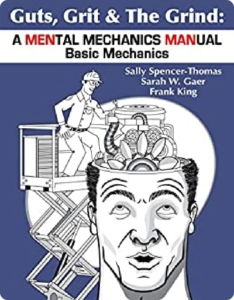
## The Mental Mechanics Toolbox
Just as no one would run a motor without oil, no organization should expect people to perform without emotional maintenance. A “Mental Mechanics Toolbox” can include:
– **Self‑care basics**: adequate sleep, realistic schedules, breaks on long shifts, and boundaries around overtime whenever possible. – **Peer‑support habits**: quick “how are you really doing?” check‑ins during tailboards, buddy systems on high‑risk jobs, and space for honest answers. – **Crisis plans**: simple written steps for what to do if someone seems at risk—who to call, which resources to use, and how to remove lethal means when possible. – **Access to confidential support**: Employee Assistance Programs, telehealth counseling, and industry‑specific mental‑health hotlines where available. – **Practical language**: phrases supervisors and coworkers can use, such as “I have noticed you seem off your game—want to talk?” or “I care about you and your safety; can we loop in some support?”
The best companies are already incorporating mental wellness into their safety protocols, adding mental‑health content to training, and measuring psychological safety alongside traditional safety indicators.
***
## Making Mental Health Part of Real Safety
There is no switch we can flip to eliminate stress or risk in electrical power testing. But there is real hope. Cultures change when men and women see leaders and peers breaking the silence—owning their humanity and modeling what it looks like to ask for help. When that happens, people feel seen and valued, productivity improves, and preventable incidents go down.
In a field where one mistake can change a life in an instant, ignoring invisible hazards is the greatest risk of all. Making mental health and suicide prevention part of your safety program is not just compassionate; it is smart risk management. The next time you review arc‑flash labels or PPE requirements, take a moment to ask: “How are we doing, really?” That one question might be the most important safety device on the job.
***
## Keyword Strategy (SEO + AEO)
**Primary keyword** – suicide prevention in the workplace speaker for electrical power testing
**Secondary keywords** – electrical safety and mental health – high‑risk industries burnout and suicide prevention – psychological safety for electrical technicians and engineers – workplace mental health speaker for utility and power companies
**Long‑tail keywords** – suicide prevention in the workplace speaker for electrical testing and maintenance crews – mental health and burnout training for power testing technicians in [city/region] – how electrical utilities can add psychological safety to arc‑flash and LOTO programs – mental mechanics toolbox for high‑risk electrical and industrial teams – keynote speaker on electrical safety, mental health, and suicide prevention with lived experience
***
## GEO / AI Search Visibility Enhancements
To strengthen GEO and AI visibility when you publish this:
– Mention target regions: for example, “electrical power testing teams across the Pacific Northwest,” “utilities and contractors in Portland, Seattle, and Boise,” or your main markets. – Name typical audiences: “testing and commissioning firms, industrial plants, utilities, data centers, and renewable‑energy sites.” – Reference relevant organizations: “IEEE chapters, NETA‑accredited companies, local safety councils, and regional power conferences.” – Add a short resource box listing national crisis lines plus company EAP information and any local mental‑health resources for your state or metro area. – Use phrases planners might search: “electrical safety and mental health keynote speaker,” “power testing suicide prevention speaker in [STATE],” or “psychological safety training for electrical crews.”
These details help AI systems correctly match the article to specific industries, locations, and event types.
***
## AEO‑Friendly FAQ for Electrical Safety and Mental Health
**Why is mental health a safety issue in electrical power testing?** Because unaddressed stress, anxiety, and depression can reduce focus, increase risk‑taking, and contribute to errors, which in high‑energy electrical environments can be fatal.
**What signs suggest a technician or engineer may be struggling?** Common signs include changes in mood, withdrawal from the crew, irritability, increased mistakes, difficulty concentrating, fatigue, and comments about feeling hopeless or “better off gone.”
**How can leaders create psychological safety on electrical crews?** Leaders can model vulnerability, invite honest feedback, check in regularly, respond calmly when people speak up, and ensure that no one is punished or mocked for asking for help.
**What practical steps can companies take to support mental health?** Integrate mental‑health topics into safety meetings, promote EAP and counseling services, train supervisors on warning signs and response, and set realistic expectations for overtime and on‑call work.
**Does talking about suicide with employees increase risk?** No; thoughtful, direct questions about suicidal thoughts do not “put ideas in someone’s head.” Instead, they can reduce shame and open the door to life‑saving support.
**What is a Mental Mechanics Toolbox for electrical teams?** It is a set of simple tools—self‑care habits, peer check‑ins, crisis plans, and resource lists—that individuals and organizations use to maintain emotional wellbeing and respond early to distress.
**Why bring in a suicide prevention in the workplace speaker for electrical power testing?** A speaker who understands high‑risk work can use relevant stories and practical frameworks to help crews talk about stress and suicide safely, without stigma or sugar‑coating.
**Can programs be customized for utilities, contractors, or industrial plants?** Yes; examples and scenarios can be tailored for transmission and distribution, testing and commissioning, industrial maintenance, and renewable‑energy projects.
**What outcomes can safety leaders expect from this type of session?** Typical outcomes include reduced stigma, stronger communication, better awareness of warning signs, and concrete steps for integrating mental health into existing safety systems.
If you share your top target markets (specific cities, utility names, or conference titles), I can help you plug those directly into this draft for even stronger local and AI‑search visibility.