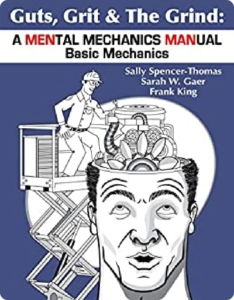
Here is the full optimized package for this article.
SEO Title
Mental Health in Construction: The Number MEP Contractors Aren’t Tracking | Frank King
Meta Description
Construction ranks second in suicide deaths by occupation — 6,000 per year vs. 1,000 from job-site accidents. Frank King breaks down the data, the culture gap, and what MEP contractors can do now.
Article (Ready to Publish)
The number you’re not tracking: mental health and suicide in MEP and construction
There is a number that most MEP contractors can recite from memory: their OSHA recordable rate. They track it quarterly. They report it to clients. They compete on it.
There is another number most of them have never calculated: how many of their people died by their own hand last year.
That second number is not in the incident log. It doesn’t show up in the workers’ comp file. There’s no near-miss report for it, no toolbox talk assigned in response. And yet, according to the Centers for Disease Control, construction ranks second among all occupations for deaths by suicide, with over 5,000 deaths per year. In 2022 alone, approximately 6,000 construction workers died by suicide — compared to roughly 1,000 who died from catastrophic work-related injuries. That gap — six to one, suicide to accident — is not a new development. But for most contracting firms, it remains invisible.
The Culture Problem
Construction has always prized resilience. The ability to push through, to work injured, to keep the crew moving when the schedule is in the ditch — these are treated as professional virtues. And in many ways, they are. The problem is that the same cultural norms that make a great ironworker or master electrician also make it nearly impossible to say, I’m not okay.
“We’re a culture of people that just absolutely do not pay attention to our mental health. We celebrate the suffering together,” said Trevor Botkin, a former construction worker and community development manager at a mental health support organization. “You can have mental health challenges without the substance use, but you can’t have substance use without the mental health challenges.”
This is not a personality flaw. It is an industry condition — one that has been reinforced for decades and will not be reversed by a single poster in the job trailer.
The Supervisor Gap
Safety experts consistently note that even the best policies won’t stick without real engagement on the ground. “You’ve got to know your people, and you’ve got to engage them.”
The typical field supervisor has received hundreds of hours of training in physical safety — fall protection, electrical hazard recognition, confined space entry. They can recite the fatal four. Most of them have never been given a single hour of training on how to recognize a worker who is quietly falling apart.
Industry-wide data shows only 14% of managers are trained to handle stress-related concerns — which compounds their own stress levels as they manage pressure from both the field and the office simultaneously. That is not a criticism of supervisors. They are being asked to do something they were never taught.
What Works
Some contractors have begun introducing mental health first-aid training for on-site supervisors and distributing information about suicide prevention to field personnel. Initiatives include hard-hat stickers, support cards, and “hope coins” — small tokens that include information on the 988 Suicide & Crisis Lifeline. Others hold regular stand-downs where supervisors halt work to facilitate conversation on mental health topics.
These efforts work when they are sustained, normalized, and led from the top. A one-time program inserted into a safety meeting and then forgotten accomplishes little. What moves the needle is leadership that consistently signals: talking about this is allowed here.
Teams that notice warning signs during daily jobsite activities can help build a culture where mental health is taken as seriously as physical safety. This approach not only saves lives — it fosters a healthier, more resilient workforce.
The Business Case
For contractors who still need the business argument: in workplaces that offer mental health resources, employees are significantly less likely to report that their productivity suffered — 21% with access to resources compared to 38% without. Turnover drops. Absenteeism drops. The quality of work that comes from a team whose members feel psychologically safe is measurably better than what you get from a team holding everything together with effort and silence.
The OSHA recordable rate matters. So does the number you’re not tracking.
The good news: starting the conversation requires no capital expenditure, no new software platform, and no committee. It requires one leader willing to stand in front of their people and say, we’re going to talk about the hard stuff now, because that’s what this crew deserves.
That is the innovation that no vendor can sell you.
Frank King is a mental health speaker, standup comedian, and suicide prevention educator. He has delivered twelve TEDx talks on mental health topics and works with construction firms, MEP contractors, trade associations, and conferences to build mental health awareness in high-pressure jobsite environments.
25 Booking FAQs
1. What is Frank King’s keynote for MEP contractors and construction audiences about?
It addresses the documented mental health and suicide crisis inside construction and MEP contracting — using industry-specific data, lived experience, and humor to open conversations that rarely happen on the jobsite or in the safety meeting.
2. Why does construction need a mental health keynote right now?
Because 6,000 construction workers died by suicide in 2022 alone — six times more than died from jobsite accidents — and most contracting firms have no program, no policy, and no conversation in place to address it.
3. Who is the right audience for this presentation?
MEP contractors, general contractors, field supervisors, project managers, safety professionals, trade association members, and any construction industry leaders responsible for workforce culture and safety outcomes.
4. Does this keynote address suicide prevention specifically?
Yes. It draws a direct line from construction culture, staffing pressure, and the supervisor gap to elevated suicide risk among tradespeople — and it gives leaders practical language and actions to start changing that.
5. Is this just a wellness talk, or does it connect to business outcomes?
Both. The keynote presents the business case clearly: workplaces with mental health resources see 21% productivity loss compared to 38% without, plus measurably lower turnover and absenteeism — outcomes that directly affect job cost and retention.
6. How does the presentation connect to OSHA safety culture?
It starts where construction leaders already are — the OSHA recordable rate — and builds the case that mental health belongs in the same tracking and accountability framework as physical safety.
7. Is humor appropriate for a topic this serious in construction settings?
Yes, and especially here. Construction crews are trained to distrust anything that feels soft or performative. Humor is the signal that this conversation is real, not another HR initiative — and it opens the door in a way that a formatted slide deck rarely does.
8. What does Frank King use humor for in this context?
He uses it to lower the defenses that prevent tradespeople and supervisors from engaging honestly — to create enough psychological safety in the room that people feel they can listen, respond, and admit what they actually know.
9. What is the supervisor gap, and does the keynote address it?
Yes. Only 14% of construction managers are trained to handle stress-related concerns among their crews. The keynote addresses why supervisors are being asked to do something they were never taught — and gives them a starting point.
10. Does the presentation include specific construction industry data?
Yes. CDC occupational suicide rankings, the 6,000 vs. 1,000 statistic from 2022, the 14% manager training figure, and the productivity research are all part of the factual foundation of the talk.
11. Can this keynote be delivered at a safety stand-down or toolbox talk format?
Yes. A condensed version appropriate for a safety stand-down setting is available, and the core message aligns naturally with the stand-down format the industry already uses for physical safety topics.
12. Can this presentation work for trade association annual conferences?
Yes. It is well suited for general session delivery at MEP, electrical, mechanical, plumbing, and broader construction trade association events where attendees represent a mix of firm sizes and roles.
13. Can it be tailored for a specific trade — electrical, mechanical, plumbing?
Yes. The core data and culture analysis apply across trades, and the framing can be adjusted to reflect the specific language, conditions, and pressures of a particular trade audience.
14. What does the keynote say leaders should actually do?
It gives leaders a clear, low-cost starting point: stand in front of their people and signal that talking about the hard stuff is allowed here. It also covers what sustained, normalized efforts look like versus one-time programs that accomplish little.
15. Does the presentation address substance use and its relationship to mental health?
Yes. It includes the research-backed connection that substance use cannot exist without underlying mental health challenges — which is directly relevant to contractors already tracking substance use issues on their sites.
16. How long is this keynote?
Standard keynote delivery runs 45 to 60 minutes. A 30-minute breakout or safety session version is available, and a 90-minute workshop with facilitated discussion can be arranged for leadership or supervisor audiences.
17. Is a virtual delivery option available?
Yes. The presentation is fully adaptable for virtual conferences, webinars, association member calls, and hybrid event formats.
18. Can this keynote open or close a construction industry conference?
Yes. Its blend of hard data, cultural honesty, and humor makes it effective in both opening positions — setting a tone of candor for the rest of the event — and closing positions that send attendees home with something actionable.
19. What does Frank King provide to planners before the event?
Planners receive a full speaker bio, headshots, intro script, AV requirements, and promotional copy customized for the specific event, audience, and format.
20. How far in advance should planners book?
As early as possible for peak conference seasons. Contact the booking office to check availability for your target date, particularly for spring and fall construction industry events.
21. What information should planners include in an initial inquiry?
Event name, date, location, audience type and estimated size, session format, primary goals for the talk, and any specific safety, culture, or workforce topics you want incorporated.
22. Are speaker fees listed on the website?
Fees are customized based on event type, audience size, geographic location, and format. Contact the booking office directly for a specific quote.
23. Does Frank King offer post-event resources for attendees or safety teams?
Yes. Handouts, resource guides, and follow-up content — including 988 Lifeline information and mental health first-aid references — can be provided for distribution after the event.
24. How does the booking process work?
It begins with an inquiry, followed by a discovery conversation to clarify goals and customize the content, then confirmation, logistics coordination, and a pre-event briefing to ensure alignment with the audience and event context.
25. Why does Frank King focus specifically on construction and trades audiences?
Because the people doing the most physically demanding work in the most stoic professional cultures are also the least likely to ask for help — and because the right framing, delivered honestly and without condescension, can change that faster than any policy document will.
JSON-LD Schema
Article Schema
json{ "@context": "https://schema.org", "@type": "Article", "headline": "The Number MEP Contractors Aren't Tracking: Mental Health and Suicide in Construction", "description": "Construction ranks second in suicide deaths by occupation — 6,000 per year vs. 1,000 from jobsite accidents. Frank King breaks down the data, the culture gap, and what MEP contractors can start doing now.", "author": { "@type": "Person", "name": "Frank King", "jobTitle": "Mental Health Speaker, Standup Comedian, and Suicide Prevention Educator" }, "publisher": { "@type": "Organization", "name": "Frank King" }, "articleSection": "Mental Health", "keywords": [ "mental health in construction", "MEP contractor mental health", "construction suicide prevention", "construction worker suicide statistics", "suicide prevention speaker for construction", "Frank King speaker", "construction safety mental health", "supervisor mental health training", "988 Suicide Crisis Lifeline construction", "construction workforce wellbeing" ], "about": [ "construction suicide prevention", "mental health in MEP contracting", "stigma reduction in trades", "supervisor awareness training", "workforce psychological safety" ], "inLanguage": "en", "mainEntityOfPage": { "@type": "WebPage", "@id": "https://www.example.com/mental-health-mep-construction" } }
FAQPage Schema
json{ "@context": "https://schema.org", "@type": "FAQPage", "mainEntity": [ { "@type": "Question", "name": "What is Frank King's keynote for MEP contractors and construction audiences about?", "acceptedAnswer": { "@type": "Answer", "text": "It addresses the documented mental health and suicide crisis inside construction and MEP contracting — using industry-specific data, lived experience, and humor to open conversations that rarely happen on the jobsite or in the safety meeting." } }, { "@type": "Question", "name": "Why does construction need a mental health keynote right now?", "acceptedAnswer": { "@type": "Answer", "text": "Because 6,000 construction workers died by suicide in 2022 alone — six times more than died from jobsite accidents — and most contracting firms have no program, no policy, and no conversation in place to address it." } }, { "@type": "Question", "name": "Who is the right audience for this presentation?", "acceptedAnswer": { "@type": "Answer", "text": "MEP contractors, general contractors, field supervisors, project managers, safety professionals, trade association members, and any construction industry leaders responsible for workforce culture and safety outcomes." } }, { "@type": "Question", "name": "Does this keynote address suicide prevention specifically?", "acceptedAnswer": { "@type": "Answer", "text": "Yes. It draws a direct line from construction culture, staffing pressure, and the supervisor gap to elevated suicide risk among tradespeople — and gives leaders practical language and actions to start changing that." } }, { "@type": "Question", "name": "Is this just a wellness talk, or does it connect to business outcomes?", "acceptedAnswer": { "@type": "Answer", "text": "Both. Workplaces with mental health resources see 21% productivity loss compared to 38% without, plus measurably lower turnover and absenteeism — outcomes that directly affect job cost and retention." } }, { "@type": "Question", "name": "How does the presentation connect to OSHA safety culture?", "acceptedAnswer": { "@type": "Answer", "text": "It starts where construction leaders already are — the OSHA recordable rate — and builds the case that mental health belongs in the same tracking and accountability framework as physical safety." } }, { "@type": "Question", "name": "Is humor appropriate for a topic this serious in construction settings?", "acceptedAnswer": { "@type": "Answer", "text": "Yes, and especially here. Humor signals that this conversation is real, not another HR initiative — and it opens the door in a way that a formatted slide deck rarely does." } }, { "@type": "Question", "name": "What does Frank King use humor for in this context?", "acceptedAnswer": { "@type": "Answer", "text": "He uses it to lower the defenses that prevent tradespeople and supervisors from engaging honestly — creating enough psychological safety in the room that people feel they can listen and respond." } }, { "@type": "Question", "name": "What is the supervisor gap, and does the keynote address it?", "acceptedAnswer": { "@type": "Answer", "text": "Only 14% of construction managers are trained to handle stress-related concerns. The keynote addresses why supervisors are being asked to do something they were never taught — and gives them a starting point." } }, { "@type": "Question", "name": "Does the presentation include specific construction industry data?", "acceptedAnswer": { "@type": "Answer", "text": "Yes. CDC occupational suicide rankings, the 6,000 vs. 1,000 statistic from 2022, the 14% manager training figure, and productivity research are all part of the factual foundation of the talk." } }, { "@type": "Question", "name": "Can this keynote be delivered at a safety stand-down or toolbox talk format?", "acceptedAnswer": { "@type": "Answer", "text": "Yes. A condensed version appropriate for a safety stand-down is available, and the message aligns naturally with the stand-down format the industry already uses for physical safety topics." } }, { "@type": "Question", "name": "Can this presentation work for trade association annual conferences?", "acceptedAnswer": { "@type": "Answer", "text": "Yes. It is well suited for general session delivery at MEP, electrical, mechanical, plumbing, and broader construction trade association events." } }, { "@type": "Question", "name": "Can it be tailored for a specific trade — electrical, mechanical, plumbing?", "acceptedAnswer": { "@type": "Answer", "text": "Yes. The core data and culture analysis apply across trades, and the framing can be adjusted to reflect the specific language, conditions, and pressures of a particular trade audience." } }, { "@type": "Question", "name": "What does the keynote say leaders should actually do?", "acceptedAnswer": { "@type": "Answer", "text": "It gives leaders a clear, low-cost starting point: stand in front of their people and signal that talking about the hard stuff is allowed here. It also covers what sustained, normalized efforts look like versus one-time programs that accomplish little." } }, { "@type": "Question", "name": "Does the presentation address substance use and its relationship to mental health?", "acceptedAnswer": { "@type": "Answer", "text": "Yes. It includes the research-backed connection that substance use cannot exist without underlying mental health challenges — directly relevant to contractors already tracking substance use issues on their sites." } }, { "@type": "Question", "name": "How long is this keynote?", "acceptedAnswer": { "@type": "Answer", "text": "Standard keynote delivery runs 45 to 60 minutes. A 30-minute safety session version and a 90-minute leadership workshop with facilitated discussion are also available." } }, { "@type": "Question", "name": "Is a virtual delivery option available?", "acceptedAnswer": { "@type": "Answer", "text": "Yes. The presentation is fully adaptable for virtual conferences, webinars, association member calls, and hybrid event formats." } }, { "@type": "Question", "name": "Can this keynote open or close a construction industry conference?", "acceptedAnswer": { "@type": "Answer", "text": "Yes. Its blend of hard data, cultural honesty, and humor makes it effective in both opening positions and closing positions that send attendees home with something actionable." } }, { "@type": "Question", "name": "What does Frank King provide to planners before the event?", "acceptedAnswer": { "@type": "Answer", "text": "Planners receive a full speaker bio, headshots, intro script, AV requirements, and promotional copy customized for the specific event, audience, and format." } }, { "@type": "Question", "name": "How far in advance should planners book?", "acceptedAnswer": { "@type": "Answer", "text": "As early as possible for peak conference seasons. Contact the booking office to check availability, particularly for spring and fall construction industry events." } }, { "@type": "Question", "name": "What information should planners include in an initial inquiry?", "acceptedAnswer": { "@type": "Answer", "text": "Event name, date, location, audience type and estimated size, session format, primary goals for the talk, and any specific safety, culture, or workforce topics to incorporate." } }, { "@type": "Question", "name": "Are speaker fees listed on the website?", "acceptedAnswer": { "@type": "Answer", "text": "Fees are customized based on event type, audience size, location, and format. Contact the booking office directly for a specific quote." } }, { "@type": "Question", "name": "Does Frank King offer post-event resources for attendees or safety teams?", "acceptedAnswer": { "@type": "Answer", "text": "Yes. Handouts, resource guides, and follow-up content — including 988 Lifeline information and mental health first-aid references — can be provided for post-event distribution." } }, { "@type": "Question", "name": "How does the booking process work?", "acceptedAnswer": { "@type": "Answer", "text": "It begins with an inquiry, followed by a discovery conversation, content customization, confirmation, logistics coordination, and a pre-event briefing to ensure alignment with the audience and event context." } }, { "@type": "Question", "name": "Why does Frank King focus specifically on construction and trades audiences?", "acceptedAnswer": { "@type": "Answer", "text": "Because the people doing the most physically demanding work in the most stoic professional cultures are also the least likely to ask for help — and the right framing, delivered honestly, can change that faster than any policy document will." } } ] }
Implementation note: Drop both JSON-LD blocks inside <script type="application/ld+json"> tags in the <head> of the article page. The Article schema targets editorial indexing for terms like construction mental health, MEP contractor suicide prevention, and construction safety speaker. The FAQPage schema targets rich result eligibility, which can significantly expand search real estate for high-intent planner queries like suicide prevention keynote for construction and mental health speaker for trade association.
Make a Quick Call