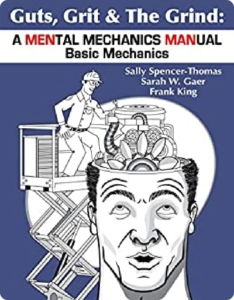

**SEO Title** Beyond Burnout: Why Academic Medicine Needs a Mental Health Tune‑Up
**Meta Description (≤160 characters)** Physicians and trainees face high burnout and suicide risk. Learn how storytelling, culture change, and “mental maintenance” can save careers—and lives. [pmc.ncbi.nlm.nih](https://pmc.ncbi.nlm.nih.gov/articles/PMC6690303/)
***
## Why Burnout in Academic Medicine Can No Longer Be Ignored
Burnout is not new in medicine, but its impact has become impossible to overlook. Physicians, trainees, and educators experience depression and suicidal thoughts at higher rates than the general population, with some estimates suggesting physicians die by suicide about twice as often as non‑physicians. Academic medical centers—where clinical care, teaching, and research collide—often amplify these risks through long hours, intense competition, and constant performance pressure. [ama-assn](https://www.ama-assn.org/practice-management/physician-health/preventing-physician-suicide)
The culture of medicine has long been governed by an unspoken code: be strong, do not ask for help, and keep moving no matter what. While resilience and self‑reliance are valuable, relying on them alone turns caring professionals into isolated sufferers who may delay seeking help until they reach crisis. [ilr.cornell](https://www.ilr.cornell.edu/scheinman-institute/blog/john-august-healthcare/healthcare-insights-suicide-and-physicians)
***
## Mental Health as Core to Safety, Leadership, and Fulfillment
Burnout and untreated mental‑health conditions are not just personal issues; they directly affect patient safety, professionalism, and organizational performance. Research links clinician distress to higher error rates, reduced empathy, and increased turnover, which in turn strain teams and training programs. Recognizing mental health as a core component of safety elevates it from a private concern to a shared institutional responsibility. [frontiersin](https://www.frontiersin.org/journals/public-health/articles/10.3389/fpubh.2025.1514706/full)
Academic medicine can learn from its own clinical playbook. Just as clinicians monitor vital signs and early warning markers in patients, leaders can learn to spot early indicators of distress in themselves and their colleagues—changes in mood, withdrawal, irritability, or cynicism—and respond before breakdowns occur. [aamc](https://www.aamc.org/news/wellbeing)
***
## What a Mental Health Tune‑Up Looks Like in Practice
A true “tune‑up” goes beyond wellness slogans and occasional workshops. Effective steps include:
– **Storytelling and honest conversation** – Personal stories from physicians, trainees, and leaders help normalize mental‑health challenges and make it safer to ask for help. [pmc.ncbi.nlm.nih](https://pmc.ncbi.nlm.nih.gov/articles/PMC6690303/) – Thoughtful use of humor can lower defenses and open the door to serious discussion without trivializing pain. [aamc](https://www.aamc.org/news/wellbeing)
– **Visible leadership commitment** – Leaders model vulnerability by acknowledging their own limits, using support services, and treating self‑care as part of professional duty. [ama-assn](https://www.ama-assn.org/practice-management/physician-health/preventing-physician-suicide) – Institutions integrate wellbeing into strategic plans, quality initiatives, and leadership evaluations—not just optional extras. [frontiersin](https://www.frontiersin.org/journals/public-health/articles/10.3389/fpubh.2025.1514706/full)
– **System‑level supports and policy changes** – Protected time for mental‑health care, confidential screening programs, and reduced barriers to accessing treatment can increase help‑seeking. [ovid](https://www.ovid.com/jnls/academicmedicine/abstract/10.1097/acm.0b013e31824451ad~the-suicide-prevention-and-depression-awareness-program-at) – Schedule adjustments, workload review, and team‑based care models can reduce chronic stressors that fuel burnout. [vitalalabama](https://vitalalabama.com/physician-suicide-awareness/)
– **“Mental maintenance” routines** – Regular check‑ins, peer‑support groups, and mentorship networks provide ongoing safety nets rather than one‑time fixes. [pmc.ncbi.nlm.nih](https://pmc.ncbi.nlm.nih.gov/articles/PMC6690303/) – Institutions adopt validated tools to monitor wellbeing over time, just as they track infection rates or patient outcomes. [aamc](https://www.aamc.org/news/wellbeing)
When academic medical centers choose transparency and proactive support over silence, they move from merely managing burnout to preventing tragedy. [ilr.cornell](https://www.ilr.cornell.edu/scheinman-institute/blog/john-august-healthcare/healthcare-insights-suicide-and-physicians)
***
## Keyword Strategy (SEO + AEO)
**Primary keyword** – suicide prevention in the workplace speaker for academic medicine and healthcare organizations [ama-assn](https://www.ama-assn.org/practice-management/physician-health/preventing-physician-suicide)
**Secondary keywords** – physician burnout and suicide in academic medicine – medical trainee mental health and suicide prevention – healthcare workplace mental health and psychological safety – wellbeing and resilience programs for academic medical centers – mental health speaker for hospitals and teaching institutions [frontiersin](https://www.frontiersin.org/journals/public-health/articles/10.3389/fpubh.2025.1514706/full)
**Long‑tail keywords**
– suicide prevention in the workplace speaker for academic medical centers and teaching hospitals – physician burnout and suicide prevention keynote for grand rounds and medical staff meetings in [CITY/STATE] – how academic medicine can build mental health maintenance and crisis response systems – resilience and wellbeing training for residents, fellows, and faculty at university hospitals – comedian and suicide prevention speaker using humor and lived experience for medical conferences [ilr.cornell](https://www.ilr.cornell.edu/scheinman-institute/blog/john-august-healthcare/healthcare-insights-suicide-and-physicians)
Use these phrases in headings, introductory paragraphs, internal links, image alt text, and schema fields to improve both SEO and AI answer‑engine performance. [direction](https://direction.com/answer-engine-optimization/)
***
## GEO / AI Search Visibility Enhancements
To help AI tools and search engines match this article to real institutions and regions:
– Reference locations such as “academic medical centers across the United States,” “university hospitals in the Midwest and Pacific Northwest,” or specific hubs like “OHSU in Portland, UW Medicine in Seattle, and academic centers in Chicago and Boston.” [facebook](https://www.facebook.com/IUMedicine/posts/physicians-have-higher-rates-of-burnout-depressive-symptoms-and-suicide-risk-tha/10156349309559237/) – Mention organizations and events: “AAMC member schools, AMA and specialty‑society meetings, resident‑wellbeing committees, and physician‑suicide awareness observances.” [ama-assn](https://www.ama-assn.org/practice-management/physician-health/preventing-physician-suicide) – Include a resource box listing: 988 Suicide & Crisis Lifeline, Crisis Text Line, physician health programs (PHPs), EAP contacts, AMA and AAMC wellbeing tools, and local/state hotlines. [vitalalabama](https://vitalalabama.com/physician-suicide-awareness/) – Use phrases planners actually search: “physician suicide‑prevention keynote speaker for academic medical center,” “resident wellbeing speaker in [STATE],” “grand rounds mental health and burnout prevention speaker.” [my.shsmd](https://my.shsmd.org/blogs/the-shsmd-team/2026/03/10/aeo-and-the-new-rules-of-healthcare-search)
These GEO and entity cues strengthen your chances of being cited in AI overviews and healthcare‑related answer boxes. [direction](https://direction.com/answer-engine-optimization/)
***
## AEO‑Friendly FAQ for Academic Medicine & Planners
**1. Why is suicide risk higher among physicians and trainees than in the general population?** Studies show physicians and medical students experience higher rates of depression, burnout, and suicidal ideation due to long hours, high responsibility, stigma around help‑seeking, and easier access to lethal means, contributing to suicide rates roughly twice those of the general population. [ama-assn](https://www.ama-assn.org/practice-management/physician-health/how-often-do-physicians-and-medical-students-die-suicide)
**2. How does burnout differ from everyday stress in academic medicine?** Burnout involves chronic emotional exhaustion, depersonalization, and a reduced sense of accomplishment; it persists over time, affects patient care, and is linked to higher error rates and turnover when left unaddressed. [vitalalabama](https://vitalalabama.com/physician-suicide-awareness/)
**3. What early warning signs suggest that a clinician or trainee may be in distress?** Warning signs include mood changes, withdrawal, irritability, increased errors, sleep problems, substance misuse, or comments about hopelessness, feeling trapped, or being a burden. [pmc.ncbi.nlm.nih](https://pmc.ncbi.nlm.nih.gov/articles/PMC6907772/)
**4. Does openly discussing suicide with physicians increase the risk?** No; evidence indicates that direct, compassionate conversations about suicidal thoughts do not increase risk and can reduce shame, especially when paired with clear pathways to confidential care. [pmc.ncbi.nlm.nih](https://pmc.ncbi.nlm.nih.gov/articles/PMC6907772/)
**5. What institutional changes help reduce burnout in academic medicine?** Helpful steps include adjusting workloads and schedules, improving staffing and workflow, offering protected time for mental‑health care, expanding confidential support services, and training leaders to recognize and respond to distress. [pmc.ncbi.nlm.nih](https://pmc.ncbi.nlm.nih.gov/articles/PMC6690303/)
**6. Why bring in a suicide prevention in the workplace speaker for academic medical centers?** A specialized speaker can translate data into relatable stories, use appropriate humor to lower defenses, and provide practical frameworks teams can adopt quickly, helping organizations move from awareness to action. [aamc](https://www.aamc.org/news/wellbeing)
**7. Can programs be tailored for faculty, residents, and medical students separately?** Yes; content can be customized for faculty leadership retreats, resident conferences, grand rounds, student orientations, or mixed‑audience town halls. [aamc](https://www.aamc.org/news/wellbeing)
**8. Are sessions appropriate for interprofessional audiences?** Absolutely; many programs are designed for physicians, nurses, APPs, allied professionals, and administrative leaders who share the same culture and stressors. [pmc.ncbi.nlm.nih](https://pmc.ncbi.nlm.nih.gov/articles/PMC6907772/)
**9. Can talks qualify for CME or maintenance‑of‑certification credit?** Many organizations grant CME or professionalism credits for physician‑wellbeing and suicide‑prevention content; programs can be structured to meet accreditor requirements. [frontiersin](https://www.frontiersin.org/journals/public-health/articles/10.3389/fpubh.2025.1514706/full)
**10. What does a “mental health tune‑up” program typically cover?** It usually includes data on burnout and suicide, culture drivers, early‑warning signs, conversation tools, system‑level strategies, and resources, all framed as part of patient safety and professional sustainability. [pmc.ncbi.nlm.nih](https://pmc.ncbi.nlm.nih.gov/articles/PMC6690303/)
**11. How long is a typical keynote or workshop for academic medicine events?** Keynotes generally run 45–60 minutes; workshops or retreats can range from 60–120 minutes or be delivered as a series for deeper planning and practice. [aamc](https://www.aamc.org/news/wellbeing)
**12. Do you offer virtual programs for multi‑site health systems?** Yes; live virtual sessions can reach clinicians and trainees across multiple campuses and hospitals with consistent messaging and interactive Q&A. [frontiersin](https://www.frontiersin.org/journals/public-health/articles/10.3389/fpubh.2025.1514706/full)
**13. How do you ensure content is safe and non‑stigmatizing?** Talks follow best‑practice suicide‑prevention messaging, avoid graphic descriptions, emphasize hope and recovery, and clearly direct participants to confidential resources. [ilr.cornell](https://www.ilr.cornell.edu/scheinman-institute/blog/john-august-healthcare/healthcare-insights-suicide-and-physicians)
**14. What follow‑up resources are provided after a presentation?** Attendees can receive checklists, reflection prompts, crisis‑plan templates, and curated links to AMA, AAMC, specialty‑society, and institutional wellbeing resources. [ama-assn](https://www.ama-assn.org/practice-management/physician-health/preventing-physician-suicide)
**15. Can you help leadership teams design a broader wellbeing strategy?** Yes; follow‑up consulting and series programming can help integrate wellbeing metrics, leadership behaviors, and system‑level changes into ongoing quality and safety efforts. [aamc](https://www.aamc.org/news/wellbeing)
**16. How can institutions encourage clinicians to seek help without fear?** They can clarify confidentiality protections, reduce licensing and credentialing barriers, promote anonymous screening tools, and publicly endorse help‑seeking as part of professional responsibility. [pmc.ncbi.nlm.nih](https://pmc.ncbi.nlm.nih.gov/articles/PMC6690303/)
**17. Do you address gender and specialty‑specific risks, such as for women physicians or emergency clinicians?** Programs can highlight elevated risks among women physicians and certain specialties, and discuss tailored strategies based on current research. [acep](https://www.acep.org/life-as-a-physician/wellness/wellness/wellness-week-articles/physician-suicide)
**18. Are family members or significant others ever included?** By request, some sessions or materials can involve family members, recognizing their role in noticing warning signs and supporting clinicians. [vitalalabama](https://vitalalabama.com/physician-suicide-awareness/)
**19. What information helps you customize a program for our institution?** Useful details include audience mix, size, specialties, existing wellbeing initiatives, recent events, and specific goals such as improved retention, culture change, or post‑event action steps. [frontiersin](https://www.frontiersin.org/journals/public-health/articles/10.3389/fpubh.2025.1514706/full)
**20. How are fees structured for hospitals, schools, and systems?** Fees vary by format (in‑person vs. virtual), length, travel, and add‑on workshops or consulting, with transparent written proposals provided in advance.
**21. How far in advance should we book a suicide‑prevention and wellbeing speaker?** Major conferences and system‑wide events often book 6–12 months ahead; departmental or virtual sessions may be scheduled with shorter notice depending on availability.
**22. Do you also work with non‑academic health systems or community hospitals?** Yes; similar programs are delivered to community hospitals, VA facilities, group practices, and other healthcare settings. [aamc](https://www.aamc.org/news/wellbeing)
**23. Can you provide separate sessions for leaders versus front‑line staff?** Yes; leadership sessions focus on culture, policy, and modeling behavior, while front‑line sessions emphasize daily tools and peer support. [frontiersin](https://www.frontiersin.org/journals/public-health/articles/10.3389/fpubh.2025.1514706/full)
**24. Do you address intersectional issues like race, gender, and training status?** Programs can incorporate how bias, discrimination, and marginalization intersect with mental‑health risk and access to care in academic medicine. [pmc.ncbi.nlm.nih](https://pmc.ncbi.nlm.nih.gov/articles/PMC6907772/)
**25. How do we start booking you as a suicide prevention in the workplace speaker for academic medicine?** Share your event date, location, and audience; schedule a brief discovery call; review a customized proposal; then confirm the agreement so we can begin promoting your program.
***
## Example JSON‑LD Schema (Article)
“`json { “@context”: “https://schema.org”, “@type”: “Article”, “headline”: “Beyond Burnout: Why Academic Medicine Needs a Mental Health Tune-Up”, “description”: “Academic medicine faces high rates of burnout and physician suicide. This article explains how culture change, storytelling, and mental health maintenance can protect clinicians and trainees.”, “author”: { “@type”: “Person”, “name”: “Frank King” }, “articleSection”: “Academic medicine wellbeing, physician burnout, suicide prevention, and workplace mental health”, “about”: [ “physician burnout and suicide”, “academic medicine mental health”, “suicide prevention in healthcare workplaces”, “workplace mental health speaker” ], “keywords”: [ “physician burnout and suicide in academic medicine”, “medical trainee mental health and suicide prevention”, “suicide prevention in the workplace speaker for academic medicine”, “healthcare workplace mental health and psychological safety” ], “mainEntityOfPage”: { “@type”: “WebPage”, “@id”: “https://example.com/beyond-burnout-academic-medicine-mental-health” }, “publisher”: { “@type”: “Organization”, “name”: “The Mental Health Comedian” } } “`
Would you like a companion `FAQPage` JSON‑LD block using a subset of the Q&A above for richer FAQ snippets in search results and AI overviews?